
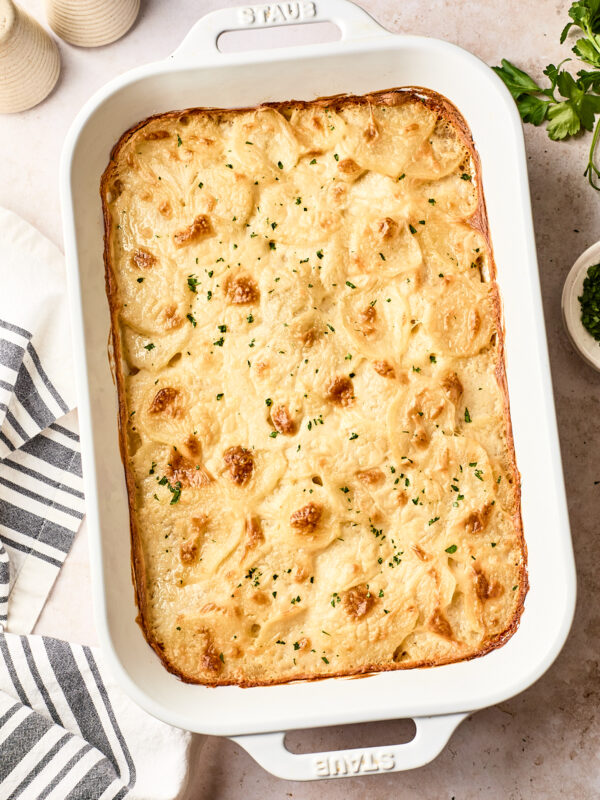
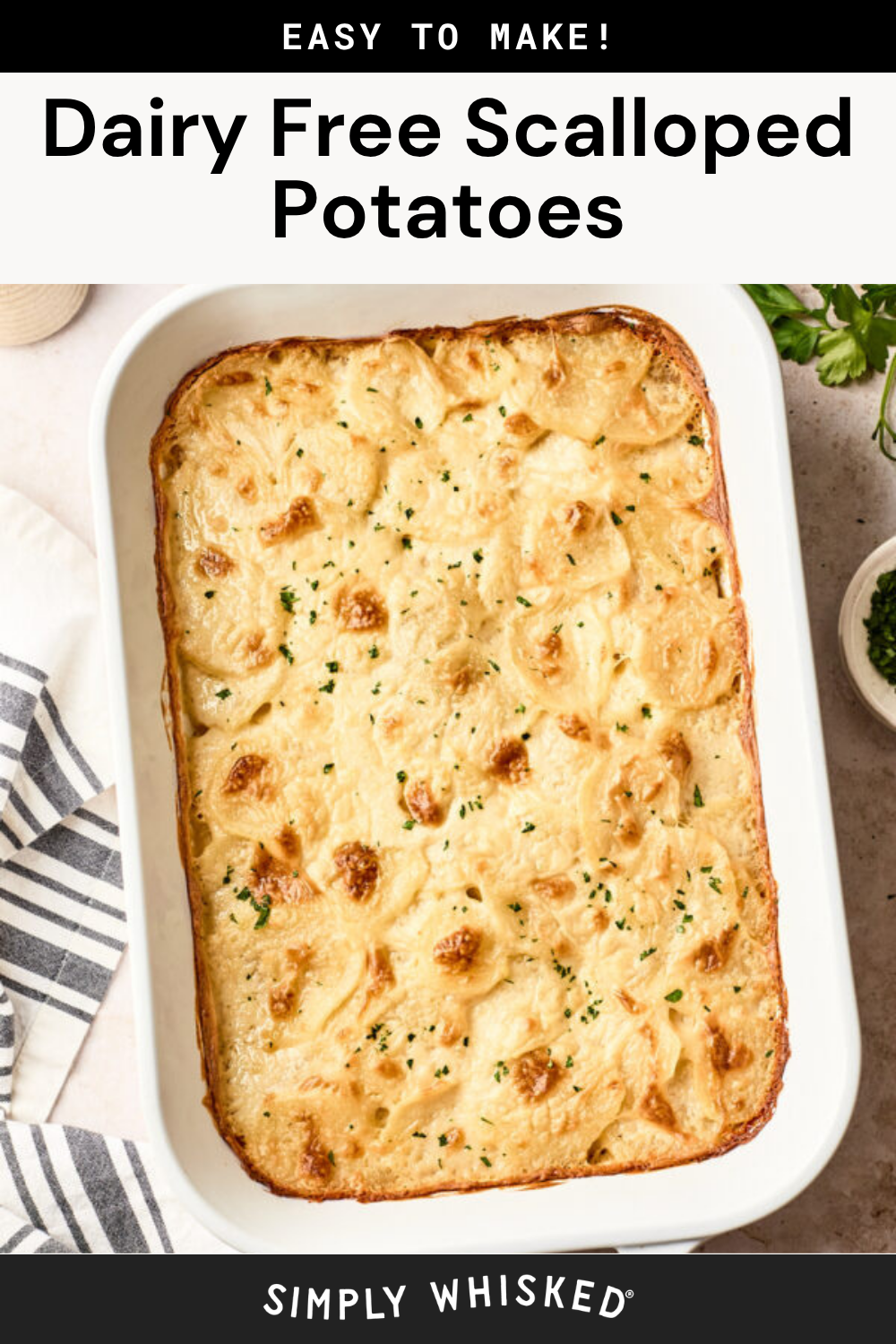
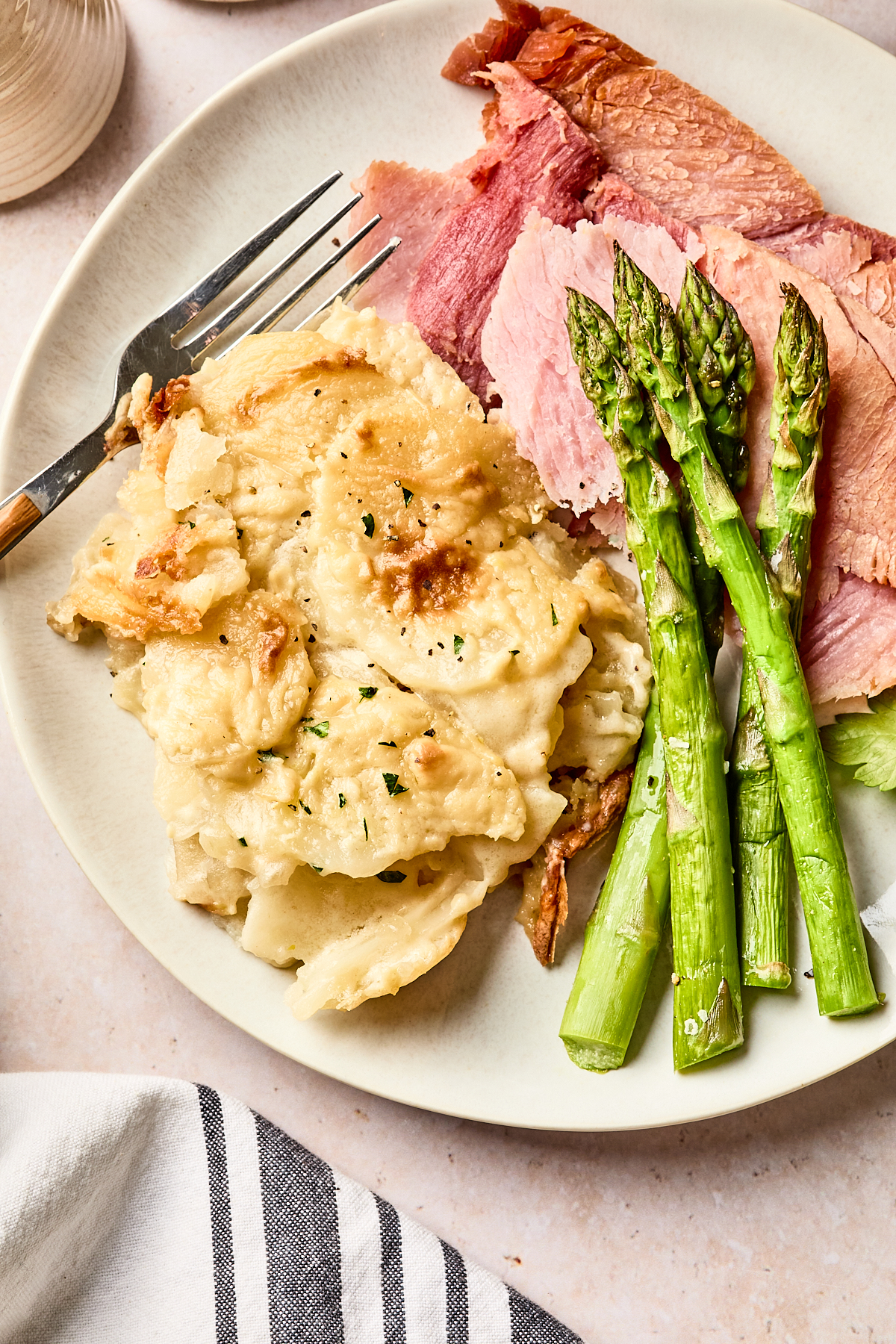
Why you’ll love these dairy free scalloped potatoes
I’ve always been a fan of scalloped potatoes, but it wasn’t until recently that I realized scalloped potatoes aren’t supposed to have cheese. The dish that we commonly refer to as scalloped potatoes is actually potatoes au gratin. If there’s no cheese, you can count me in.
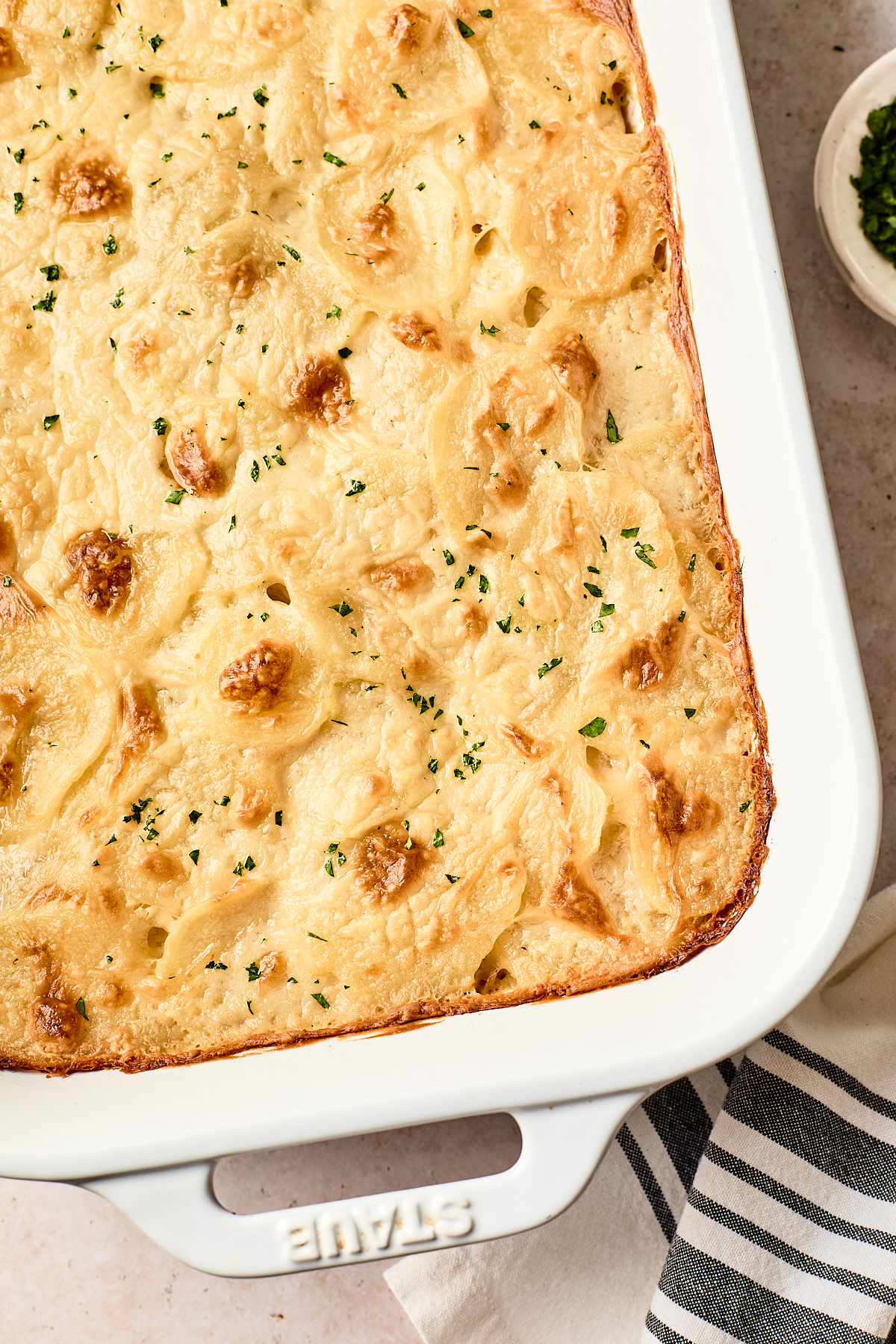
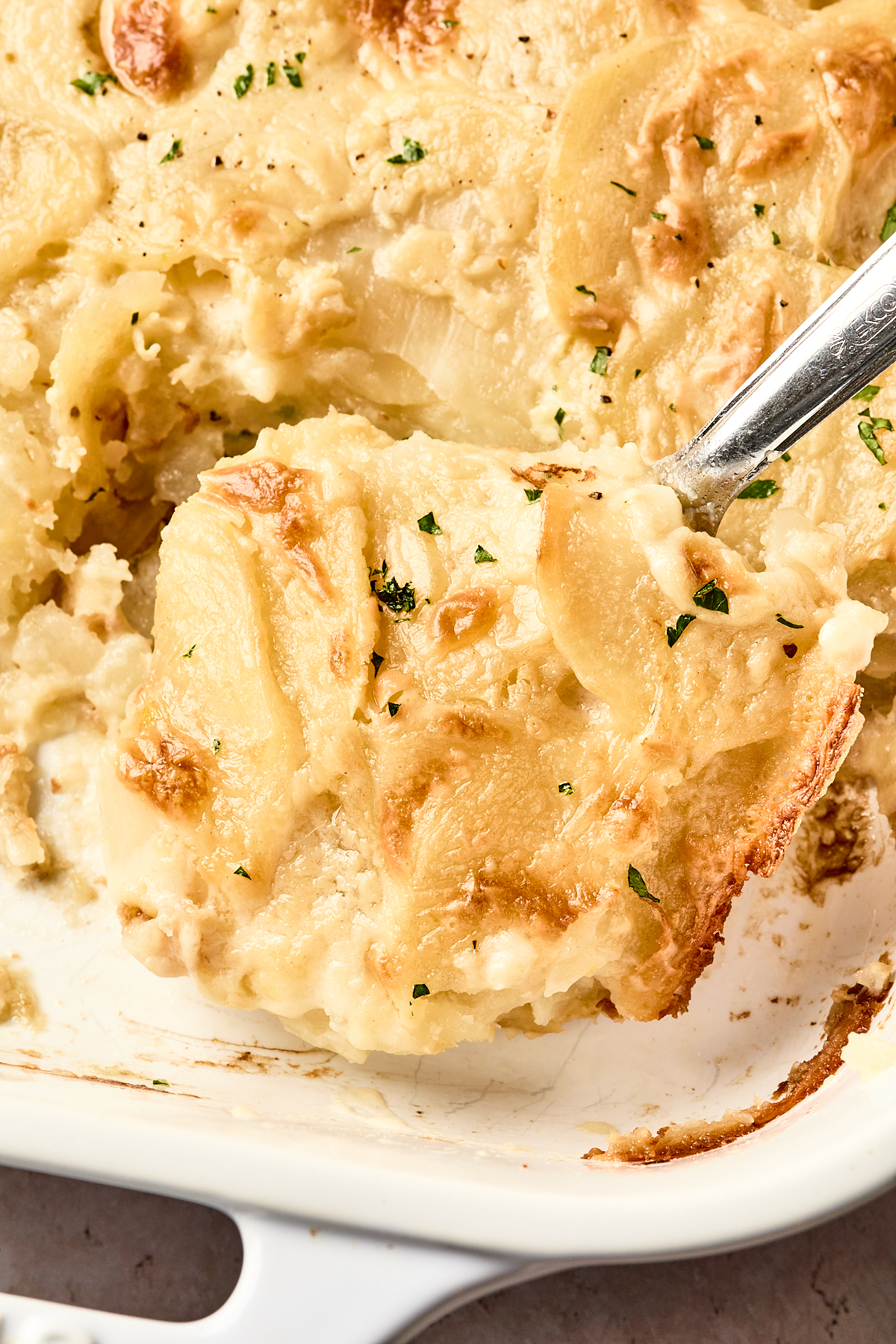
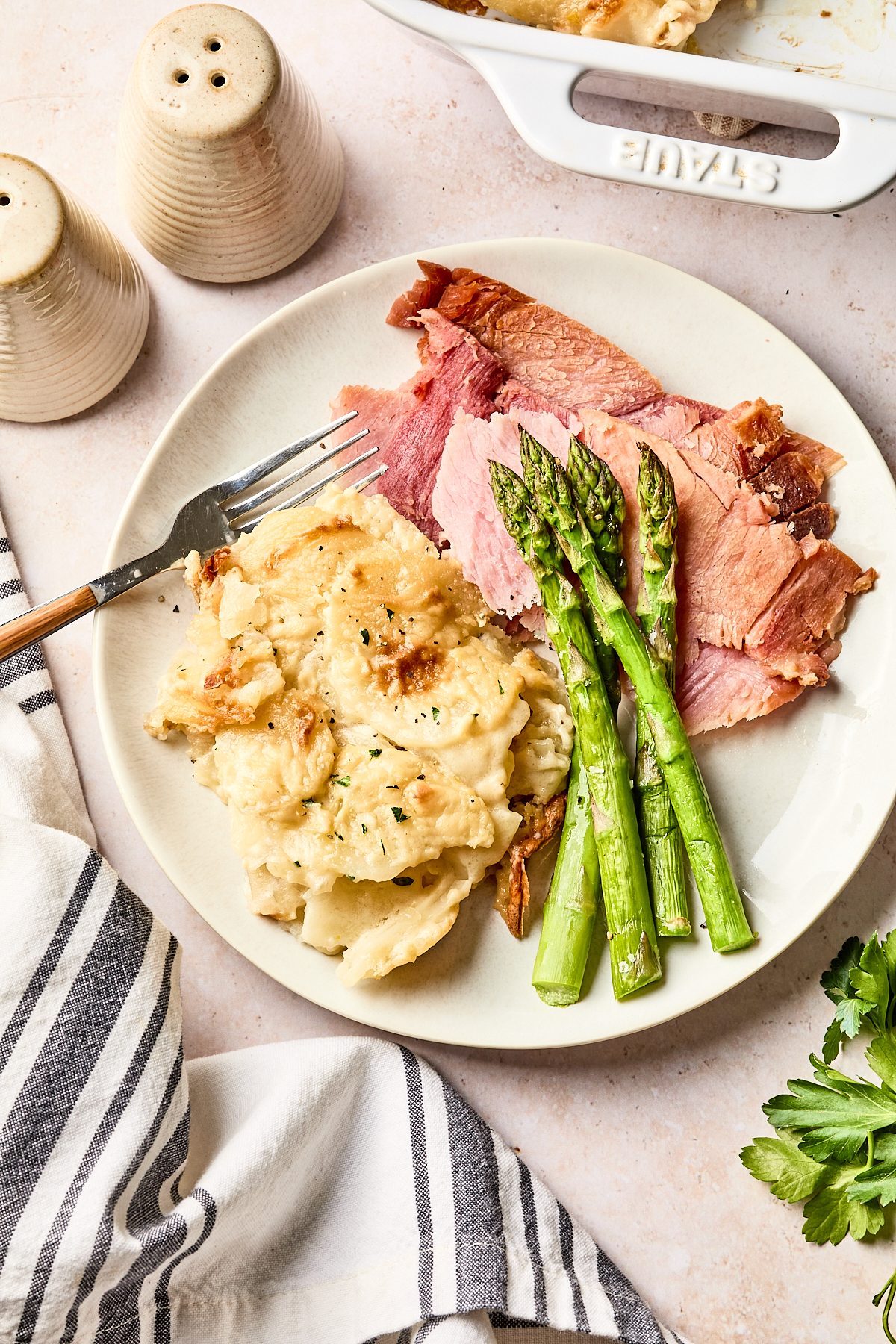
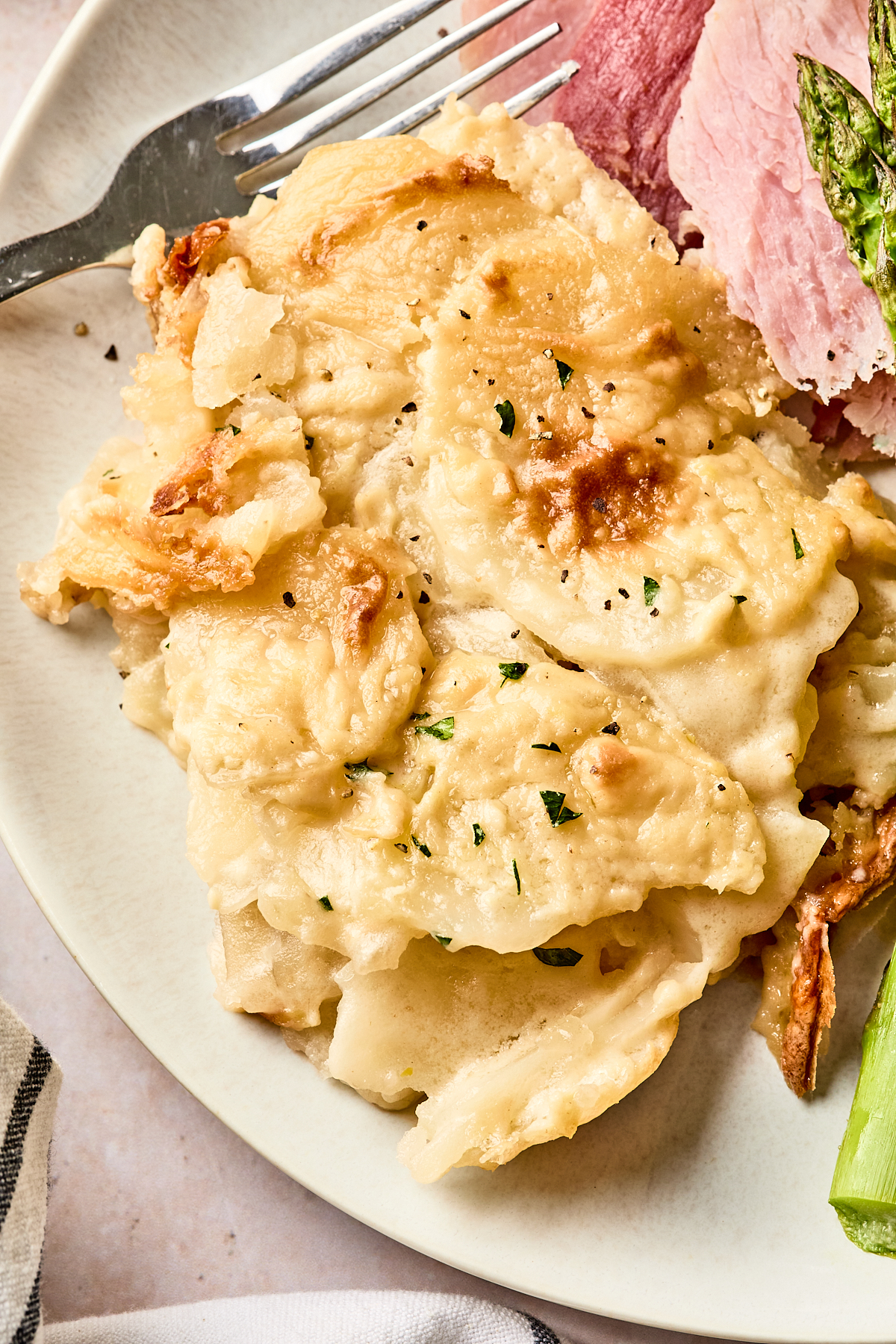
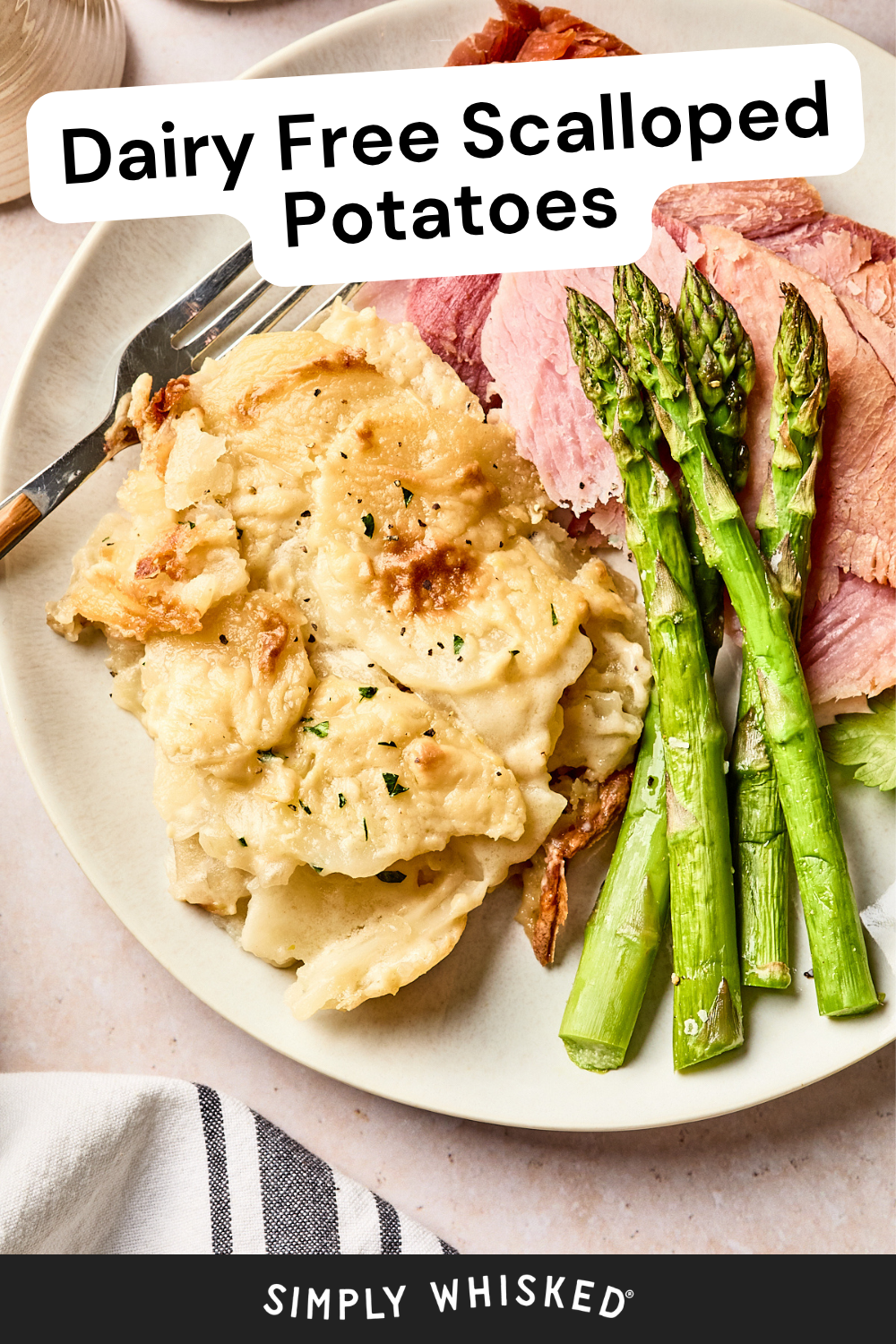
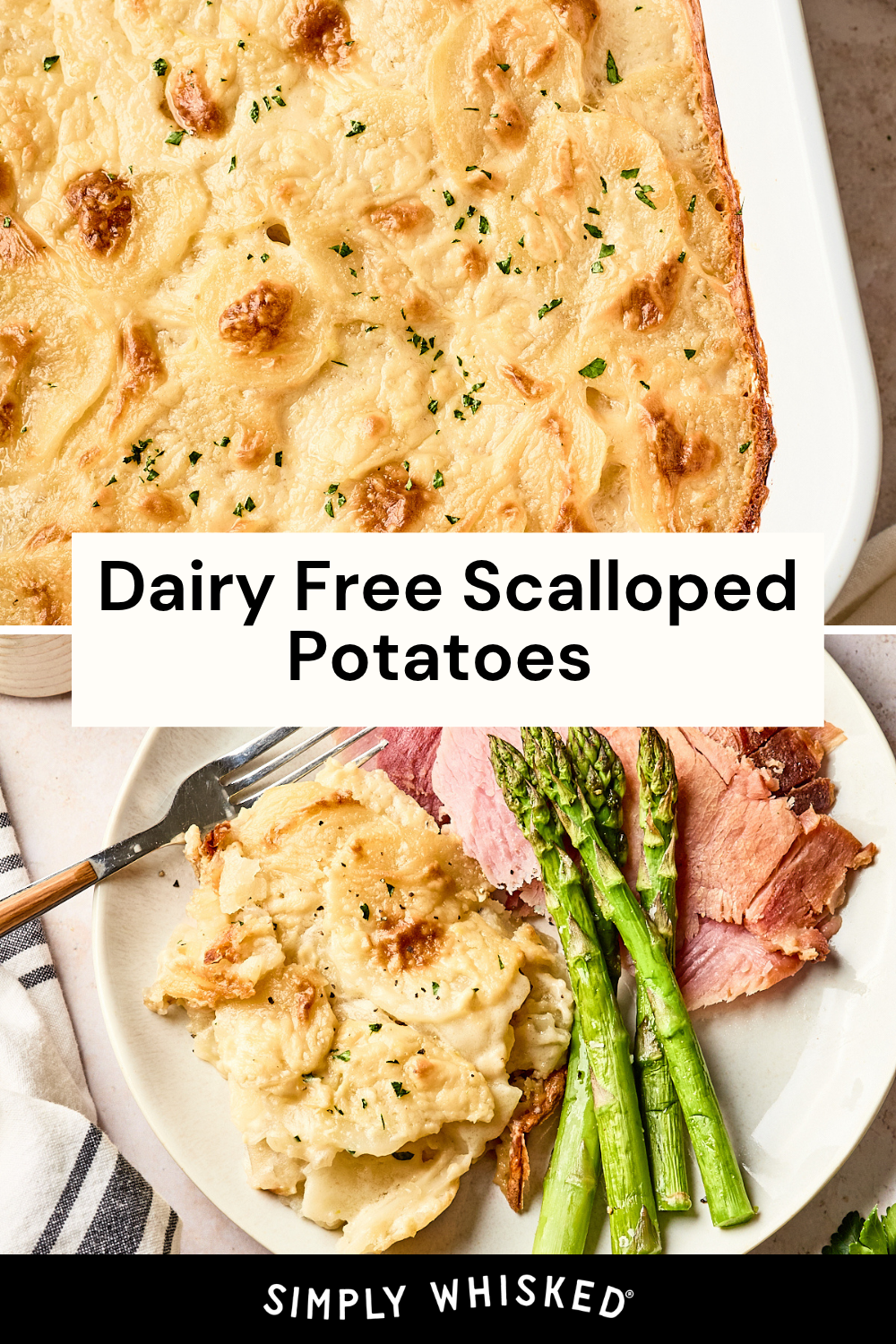
This dairy free scalloped potatoes recipe uses a blend of creamy canned coconut milk and dairy free milk to create a dairy free bechamel sauce that’s just as creamy as the traditional version, with a subtle garlic flavor and perfectly tender, thinly sliced potatoes.
More dairy free potato recipes: baked potato soup / dairy free mashed potatoes / patatas bravas recipe / potato leek soup with ham
Ingredient notes:
- Potatoes – The starch content of russets works best for scalloped potatoes, but Yukon gold potatoes would be my next choice.
- Dairy free butter – We like to use Earth Balance buttery sticks, but any brand of dairy free butter will work. You can also substitute olive oil in equal amounts if that’s all you have on hand.
- Coconut milk – I used a blend of coconut milk and cashew milk (any dairy free milk would work). I like this blend of dairy free milks because you get the creaminess of the canned coconut milk, but the nut milk balances the sweetness of the coconut milk. This is my go-to method for getting a creamy texture, and I use it in a ton of recipes, like my creamy broccoli soup and my dairy free alfredo sauce.
- Dairy free milk – We typically use cashew milk or almond milk, but if you have a nut allergy, substitute any dairy free milk that works for you. Soy, oat or flax milk will work great.
- All-purpose flour – This helps thicken the sauce. To make it gluten free, substitute 2 tablespoons of cornstarch instead of the flour (and make sure to use gluten free broth).
- Nutritional yeast – This adds to the cheesy flavor of the scalloped potatoes. You can find it in the organic section of your grocery store, but feel free to leave it out if you don’t have it or can’t find it.
Making changes to a recipe can result in recipe failure. Any substitutions listed below are simple changes that I believe will work in this recipe, but results are not guaranteed.

Melissa’s tips + tricks:
- Slice your potatoes nice and thin. The key to getting a really tender scalloped potatoes is slicing them really thinly. You can definitely do this with a knife, but the process goes a little faster if you have a mandolin. Once you’re potatoes are sliced, place them in a bowl and cover them with cold water to prevent them from turning brown.
- Make ahead tip: You can make this recipe and refrigerate it for up to 24 hours before baking it. Add about 5-10 minutes to the covered baking time if starting from cold.
- Storage and reheating. Store leftovers in an airtight container in the refrigerator for up to 4 days. Reheat individual portions in the microwave, or cover and reheat the entire dish in a 350°F oven until warmed through.
Frequently asked questions
Russet potatoes work best for scalloped potatoes because of their starchy texture, but Yukon gold potatoes would also work well. Avoid waxy red potatoes as they don’t absorb the sauce as well.
The potatoes should be tender and easily pierced with a fork or knife, and the sauce should be bubbling around the edges. The top should be lightly golden after the final uncovered baking time.
Yes. These freeze well for up to 3 months. Let them cool completely, then wrap tightly in plastic wrap and foil. Thaw overnight in the refrigerator before reheating in a 350°F oven until warmed through. Make sure they are completely thawed before reheating and keep the dish covered with foil to prevent the potatoes from drying out.
If using cornstarch instead of flour, make sure you let the sauce come to a full simmer – cornstarch needs heat to activate. If you find that your sauce still hasn’t thickened, you might want to let it rest a bit longer before serving.
More dairy free holiday recipes: dairy free green bean casserole / dairy free pumpkin pie / homemade stuffing / healthy sweet potato casserole
Dairy Free Scalloped Potatoes
Ingredients
- 6 medium russet potatoes, peeled and sliced
- 4 tablespoons dairy free butter
- 2 – 3 garlic cloves, minced
- 4 tablespoons all-purpose flour, or 2 tablespoons cornstarch (GF)
- 2 cups unsweetened dairy free milk
- 1 cup full-fat canned coconut milk
- 1 teaspoon nutritional yeast
- 1/2 tablespoon coarse salt
- Black pepper, to taste
Instructions
- Mise en place. Preheat oven to 400˚F. Slice your potatoes and place them in a large bowl of cold water to prevent them from turning brown. Then, measure the rest of your ingredients before starting.
- Make the sauce. Melt the butter in a large saucepan over medium-high heat. Add the garlic and sauté until fragrant, about 30 seconds. Next, whisk in your flour until you have a smooth roux.Then, slowly whisk in your dairy free milks, whisking until everything is smooth. Add the remaining ingredients and bring the sauce to a strong simmer. Cook until sauce has thickened enough to coat the back of a spoon. Remove it from the heat until you're ready to add it to the baking dish.
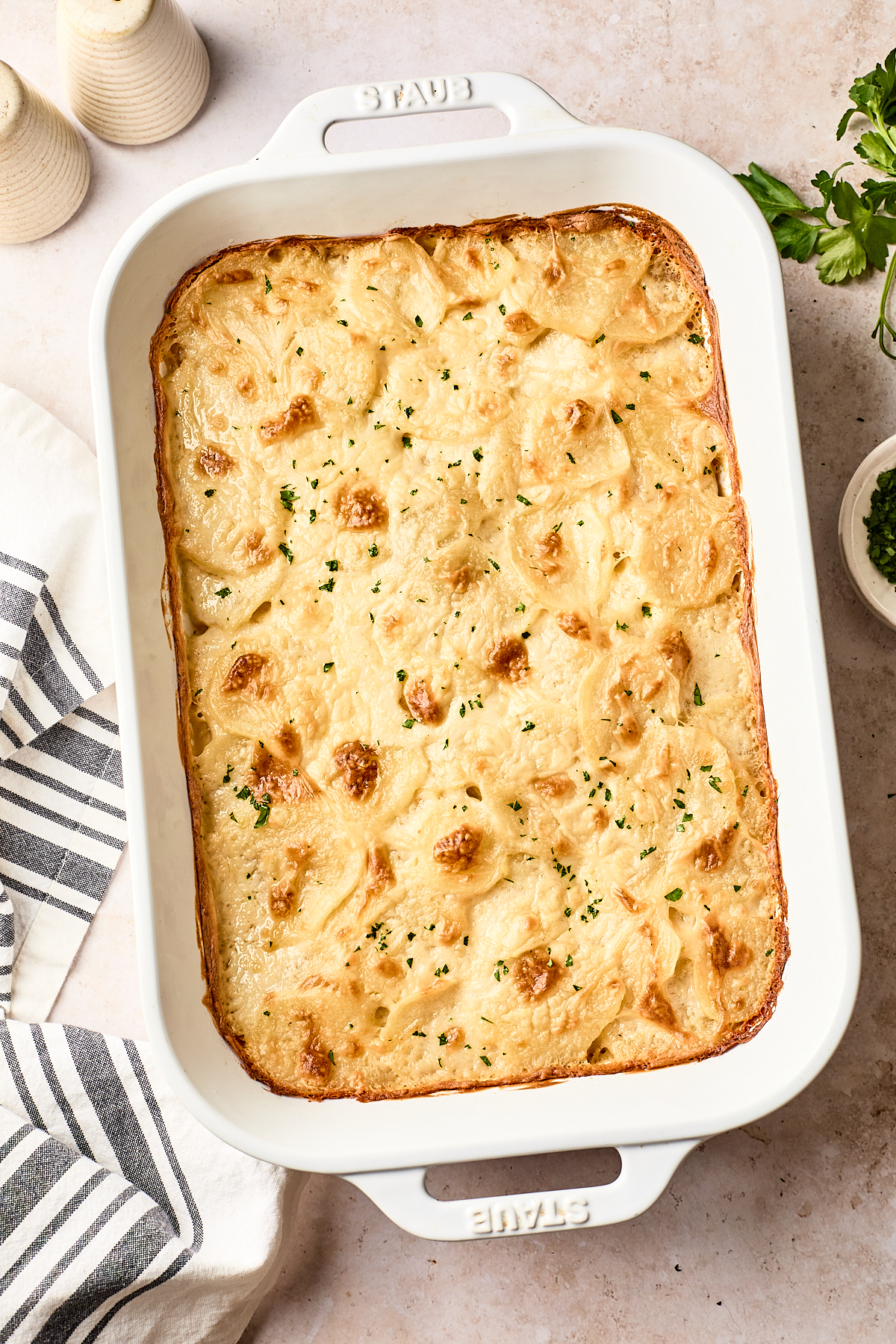
- Assemble the dish. Drain your potatoes and layer half of them in 9×13 baking dish, and cover with half of the sauce. Repeat with remaining potatoes and sauce.
- Bake until tender. Cover the baking dish with foil and bake for 30 minutes. Remove the foil and continue baking for an additional 25 – 30 minutes.Remove from the oven and allow the scalloped potatoes to rest for at least 10 minutes before serving. If desired, garnish with fresh herbs before serving.
Nutrition
Nutrition information is automatically calculated, so should only be used as an approximation.
Like this? Leave a comment below!







The recipe I’ve been looking for! I’m having guests over for Easter that are lactose intolerant, so I will definitely be adding this dish to my table.
When do I add in the nutritional yeast?
When you whisk in the broth and milk!
Tried it and LOVED it, the only difference I made was adding more nutritional yeast because I love that cheesy flavor.
Could I substitute extra virgin olive oil for the butter. Thank you for the recipe?
Yes. You definitely can! Equal amounts will work just fine.
Just made this an hour ago!
Works beautifully, though I did add some vegan grated cheeze on top 😀
10/10 would make again 😀
when do you add salt and pepper???
What can I use to replace the almond or cashew milk? My boyfriend has a nut allergy.
You can use oat milk or coconut milk! Whatever dairy free milk you like.
can this be made the day before?
Hi! love the look of this dish, can I use golden yellow potatoes for this also?Thanks! Johanna
Yes. I think they would work just fine!
Can you substitute with gluten free flour or arrow root flour (corn allergy)?
I’m not sure how those flours thicken, but if you try it, I’d love to know if it works! My guess is, if you use them for other thickening in place of cornstarch or flour, it would work here.