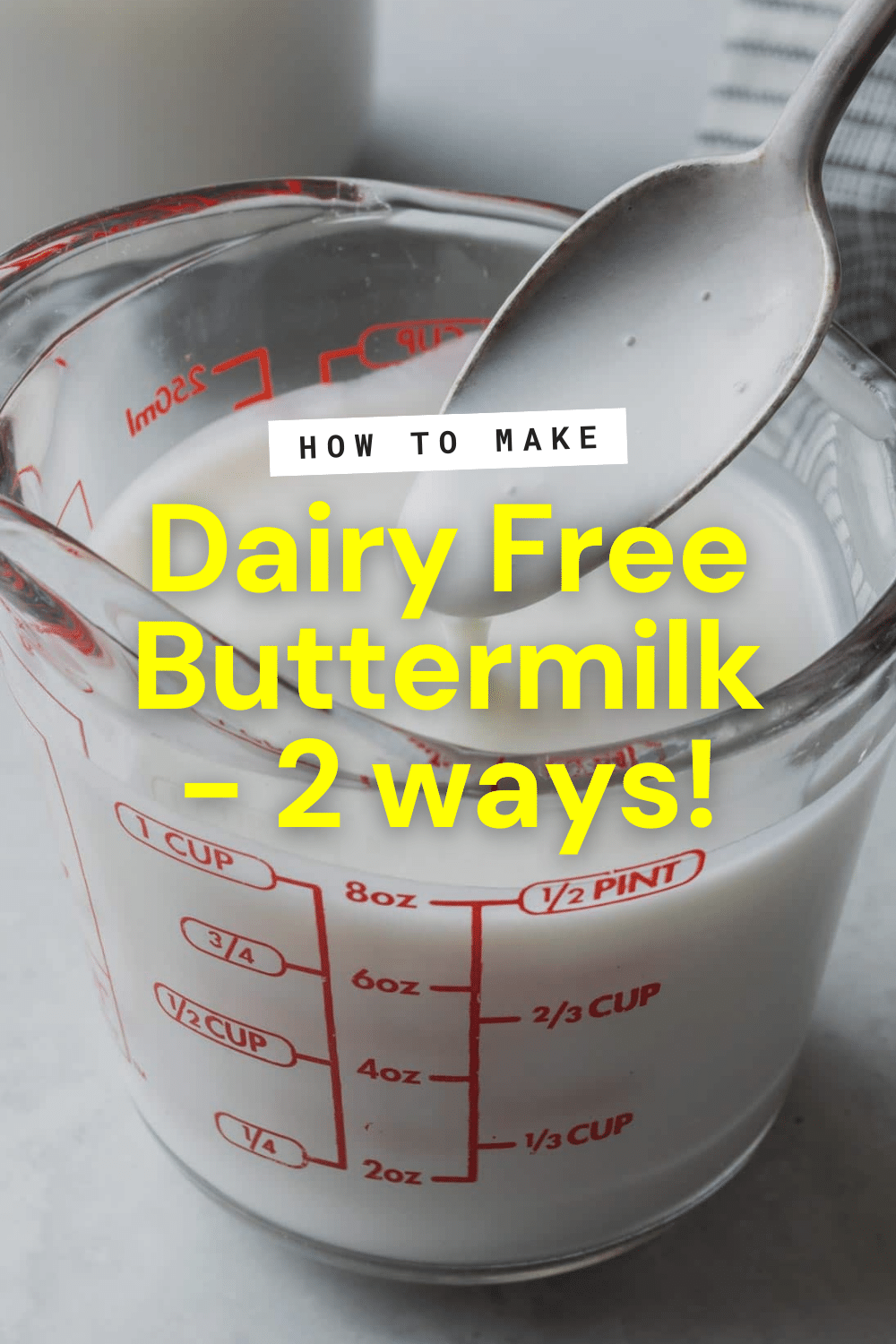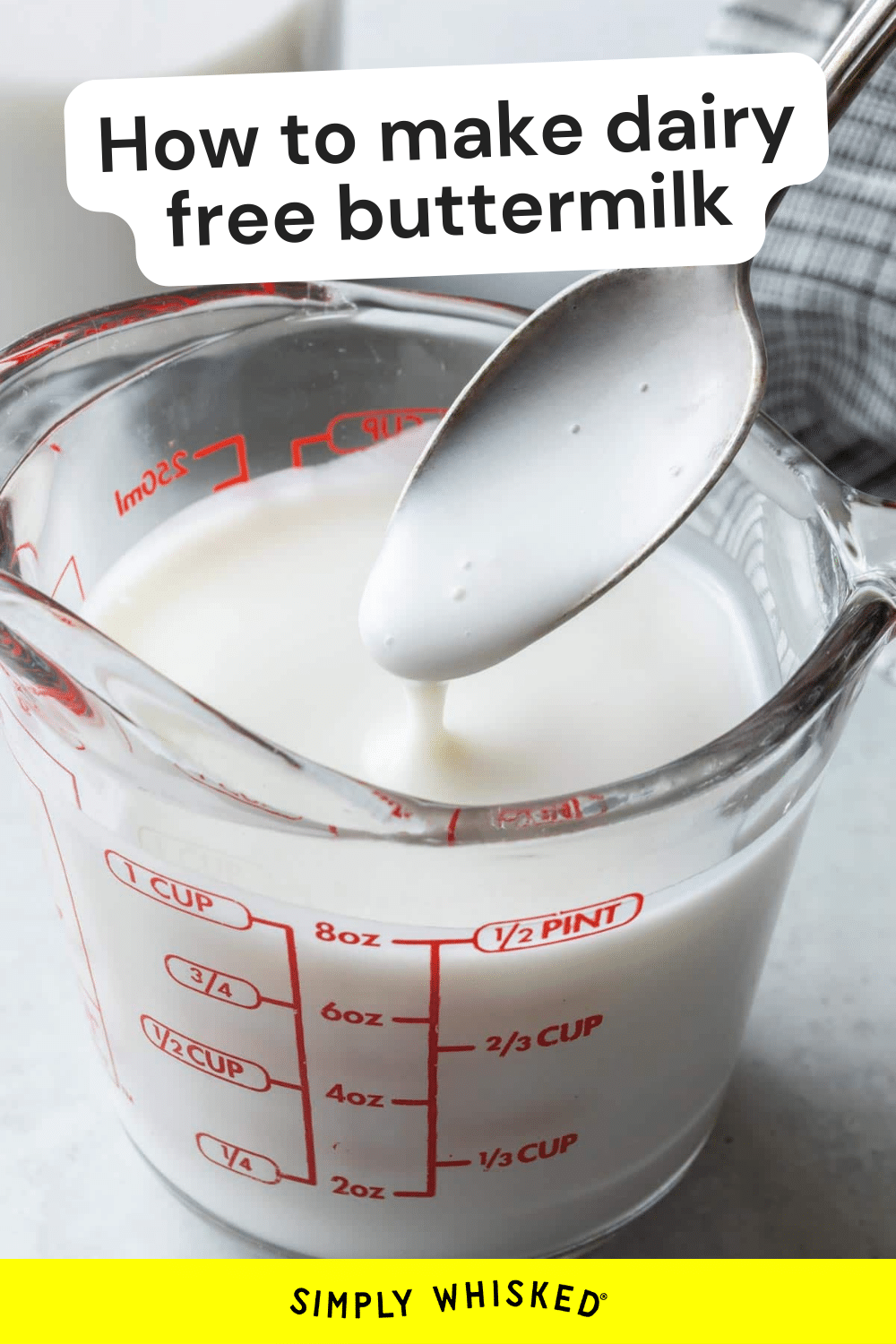
How to make dairy free buttermilk – two ways
Buttermilk is one of those ingredients that doesn’t have a great dairy free substitute that you can buy at the store. There just isn’t really anything on the market. Thankfully, it’s super easy to make your own.
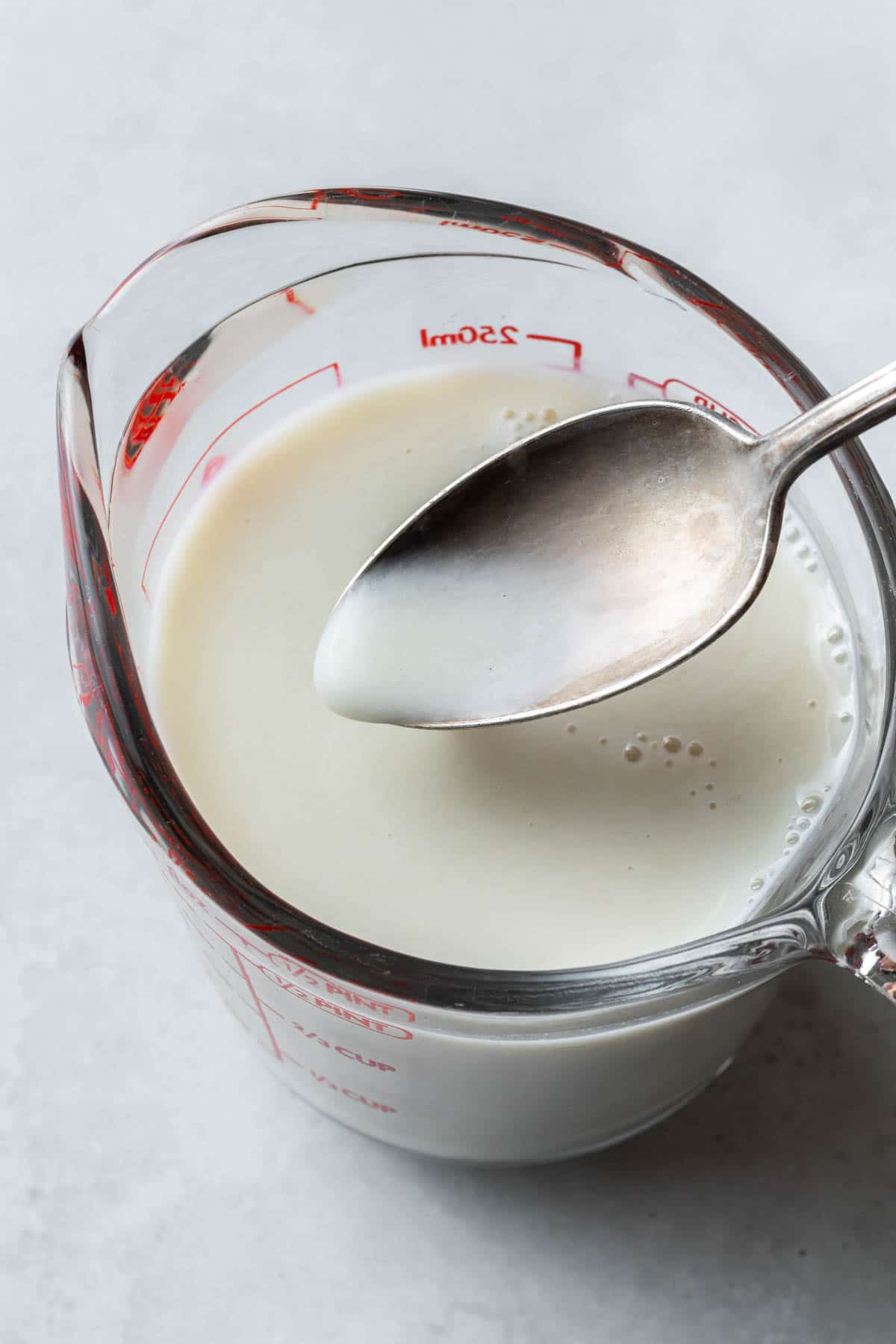
Buttermilk is used in both baking and cooking, for a variety of reasons, but even in the dairy world, the most basic substitute is generally 1 cup of milk + 1 tablespoon of acid (i.e. lemon juice or vinegar). This works with dairy free milk as well, but I’ve also started using a second method that will give a creamier more buttermilk like texture.
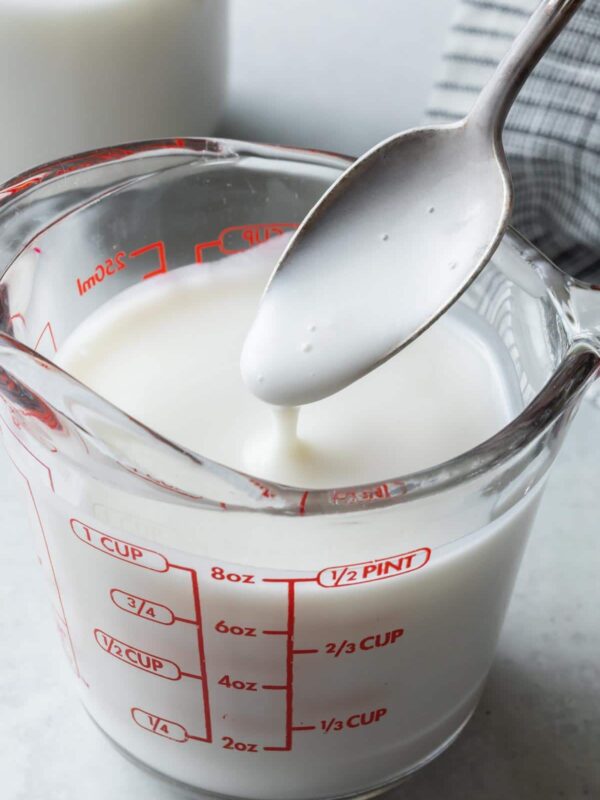
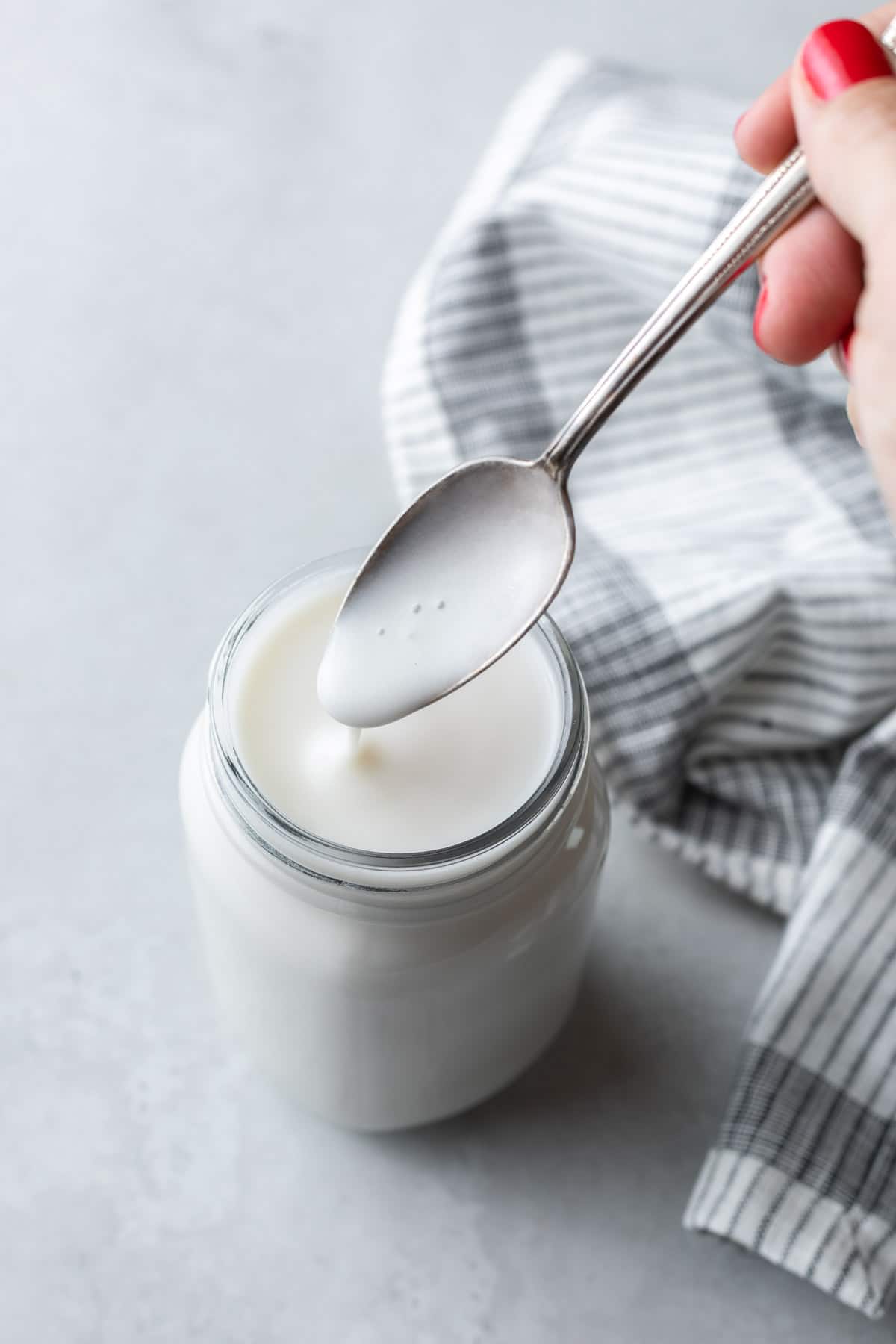
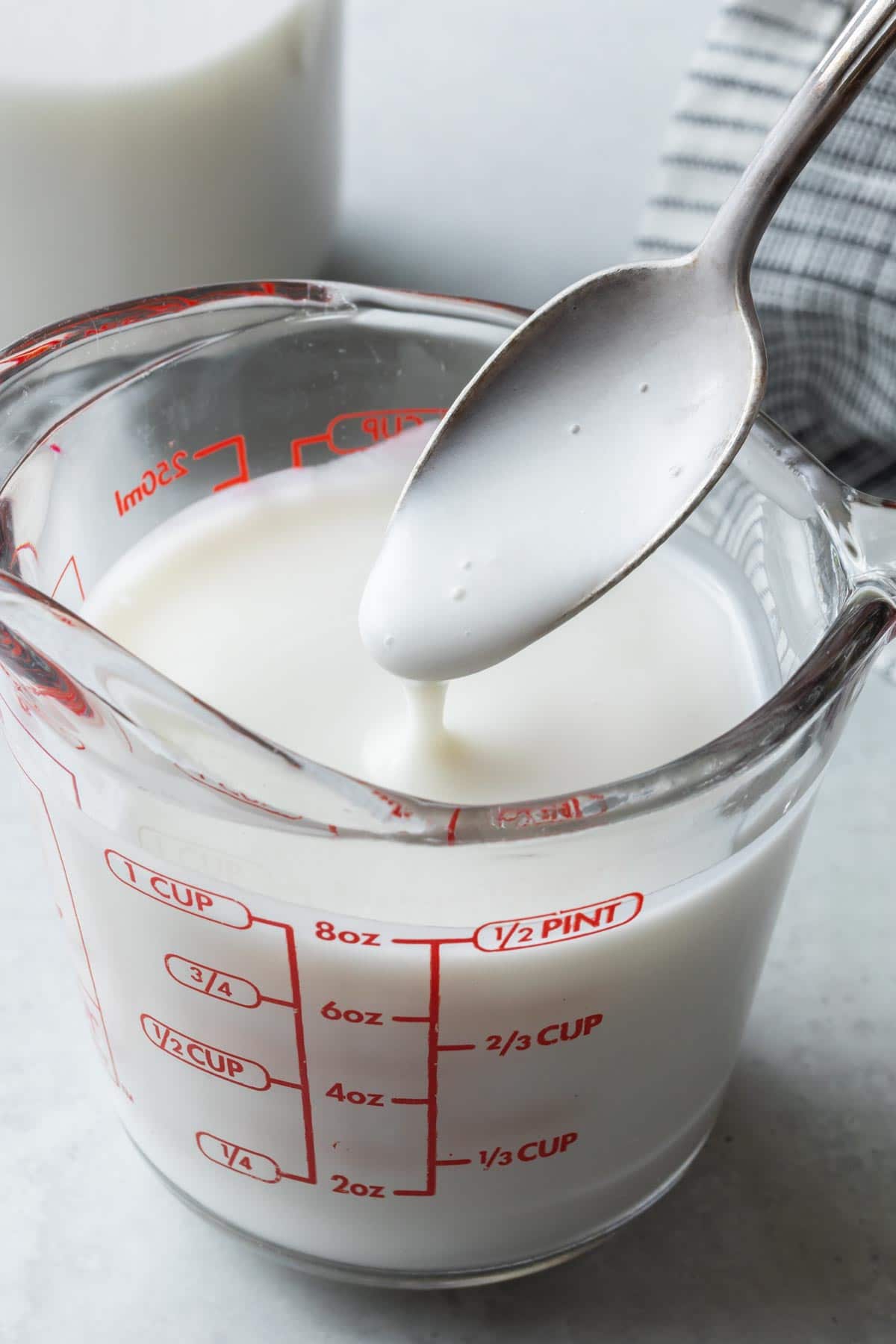
This creamy method is made with unsweetened coconut yogurt and a bit of dairy free milk so you end up with the thickness and acidity of a buttermilk.
Which method should I use?
It really doesn’t matter! Use whichever method you have the ingredients for. Either method will give you the chemical reaction of buttermilk in baking and the tangy flavor you’re looking for when cooking.
But, if you’re looking for the thick, richness of buttermilk you’re looking for, I recommend the creamy method.
More dairy free basics: scrambled eggs without milk / dairy free caesar dressing / dairy free hollandaise / dairy free buttercream frosting
Ingredient notes:
basic method:
- Dairy free milk – Use any unsweetened plant milk you have on hand. Almond, oat, or flax all work well. Avoid sweetened varieties as they’ll throw off the flavor, especially in savory recipes.
- Lemon juice – Fresh or bottled both work. You can also use white vinegar or apple cider vinegar instead . Lemon juice adds a slightly citrusy flavor, while vinegar is more neutral.
Creamy method:
- Unsweetened coconut yogurt – We use So Delicious Dairy Free unsweetened plain coconut yogurt. Any plain, unsweetened coconut yogurt works.
- Dairy free milk – Any unsweetened plant milk works here to thin out the yogurt to buttermilk consistency. We typically use whatever we have on hand, like almond, oat or flax milk.
Making changes to a recipe can result in recipe failure. Any substitutions listed below are simple changes that I believe will work in this recipe, but results are not guaranteed.
Frequently asked questions
Yes, both methods work as a 1:1 substitute for traditional buttermilk in most recipes. For dressings and dips, I recommend the creamy method for better texture. For baked goods, either method works well.
This is completely normal for the quick method (milk + acid). The acid causes the milk to separate slightly, which is exactly what you want. It mimics the tangy, slightly thick texture of traditional buttermilk and works perfectly in recipes.
Both methods last up to 1 week when stored in an airtight container in the refrigerator. Shake or stir well before using as separation is normal during storage.
If you’re using it immediately in a recipe, you don’t need to refrigerate it. But if you’re making it ahead or storing leftovers, refrigerate it within 2 hours of making it.
Ways to use dairy free buttermilk:

Dairy Free Buttermilk
Ingredients
Basic method:
- 1 cup dairy free milk
- 1 tablespoon lemon juice
Creamy method:
- 3/4 cup unsweetened plain coconut yogurt
- 1/4 cup dairy free milk
Instructions
- Combine ingredients. Add the ingredients for your chosen method to a liquid measuring cup or mixing bowl.
- Stir and let sit. Whisk together and let sit for about 5 minutes before using. Depending on what type of dairy free milk you use, the basic method mixture may look slightly curdled or separated – this is completely normal.
- Use or store. Use immediately in your recipe, or store in an airtight container in the refrigerator for up to 1 week. Shake well or stir before using.
Notes
Nutrition
Nutrition information is automatically calculated, so should only be used as an approximation.
Like this? Leave a comment below!