
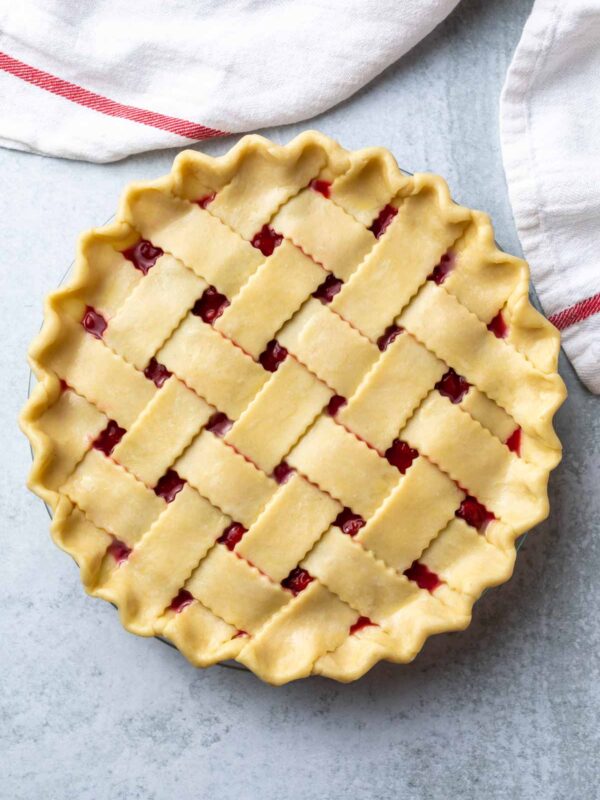

Why you’ll love this dairy free pie crust
Homemade pie crust can feel intimidating, but once you make it yourself, it’s hard to go back to store bought. Don’t get me wrong, store bought works great and it’s usually already dairy free, but there is just something about homemade pie crust.
This recipe comes together in a food processor in just a few minutes, and you can use whatever fat you have on hand. Shortening, dairy free butter, and lard all produce a great crust. They each bring something slightly different to the table, and with the right knowledge you can adjust the recipe to get exactly what you’re looking for – flaky, golden pie crust.
This recipe makes enough for a double crust pie. If you only need a single crust, it’s easy to cut the recipe in half or you can make the full batch and freeze the extra for next time!
More dairy free basics: dairy free buttermilk / dairy free biscuits / dairy free cream ricotta cheese / dairy free frosting

Ingredient notes:
- All-purpose flour – I have not tested this recipe with anything other than all-purpose flour. Do not substitute with bread flour or cake flour, as both will affect the texture of the crust. If you want to make it gluten free, I recommend using a recipe that was developed specifically for gluten free pie crust.
- Fat – This is a choose your own adventure, but it’s also the most important ingredient in your pie crust. Your choice of fat will affect the final texture and flavor. Whichever fat you choose, it needs to be very cold — this is what creates those flaky layers.
- Sugar – You don’t need a ton of sugar but this adds a bit of sweetness and helps with browning. You can omit it for a savory pie crust.
- Salt – Don’t skip this if you’re using lard or shortening (or even an unsalted dairy free butter). It brings the flavors together and prevents the pie crust from being bland.
- Ice water – The amount of water you need is going to vary depending on the fat you use and the humidity in your kitchen. Either way, you want it to be as cold as possible.
Making changes to a recipe can result in recipe failure. Any substitutions listed below are simple changes that I believe will work in this recipe, but results are not guaranteed.

Choosing your fat:
Vegetable shortening is 100% fat with no water content, which makes it very easy to work with. It produces a light, tender, and very flaky crust with a neutral flavor. It’s less likely to melt while you’re working with the dough, so it’s a great option if you’re new to pie crust, and it’s also shelf stable so it’s great when you don’t want to run to the store. This is usually what I choose because we always have it on hand.
Different brands of palm shortening will perform differently in your pie crust recipe. While I love using non-hydrogenated and sustainably sourced shortening, I’ve found that it needs a little more water than Crisco in this recipe.
Dairy free butter creates a more flavorful crust with a slightly better color, but it can be much harder to work with than shortening thanks to its water content. It softens faster and is easier to overwork. Keep it very cold – in the freezer till you actually add it – work quickly. You will most likely need less water. This is my least favorite option, but it might be worth it if you want that classic buttery flavor.
Lard makes an exceptionally flaky crust with a savory, rich flavor, and it’s actually easier to work with than dairy free butter because it has almost zero water and a higher melting point. I use lard in my biscochitos and it’s so flavorful and flaky. This is the way to go if you want that something special to elevate your pies and wow your guests.
Keep in mind that, lard is not vegan, so you’ll want to avoid this if you’re baking for someone who is.


Melissa’s tips + tricks:
- Keep everything cold. Cold fat is the key to a flaky pie crust. I like to pop my fat in the freezer for at least 15-30 minutes, sometimes even the night before. You can even chill your food processor bowl if you’re working in a hot kitchen.
- Don’t overwork the dough. Overworking the dough develops gluten, which makes it tough and chewy instead of tender and flaky. Pulse the food processor instead of letting it run continuously, and stop as soon as the dough comes together.
- Add water gradually. The amount of water you need can vary based on your fat, your flour, and even the humidity in your kitchen. Start with ¼ cup and add a tablespoon at a time. The dough should hold together when pinched but shouldn’t look or feel sticky.
- Don’t be afraid of fat pockets. If your crust has chunks of butter or shortening scattered throughout, that’s ok! In fact, the best pie crusts look lumpy until rolled. You’ll end up with a super flaky crust.
- Make ahead and freeze. This dough freezes beautifully. Wrap each disc tightly in plastic wrap, place in a zip-top freezer bag, and freeze for up to 3 months. Thaw overnight in the refrigerator before rolling out.
How to crimp a pie crust
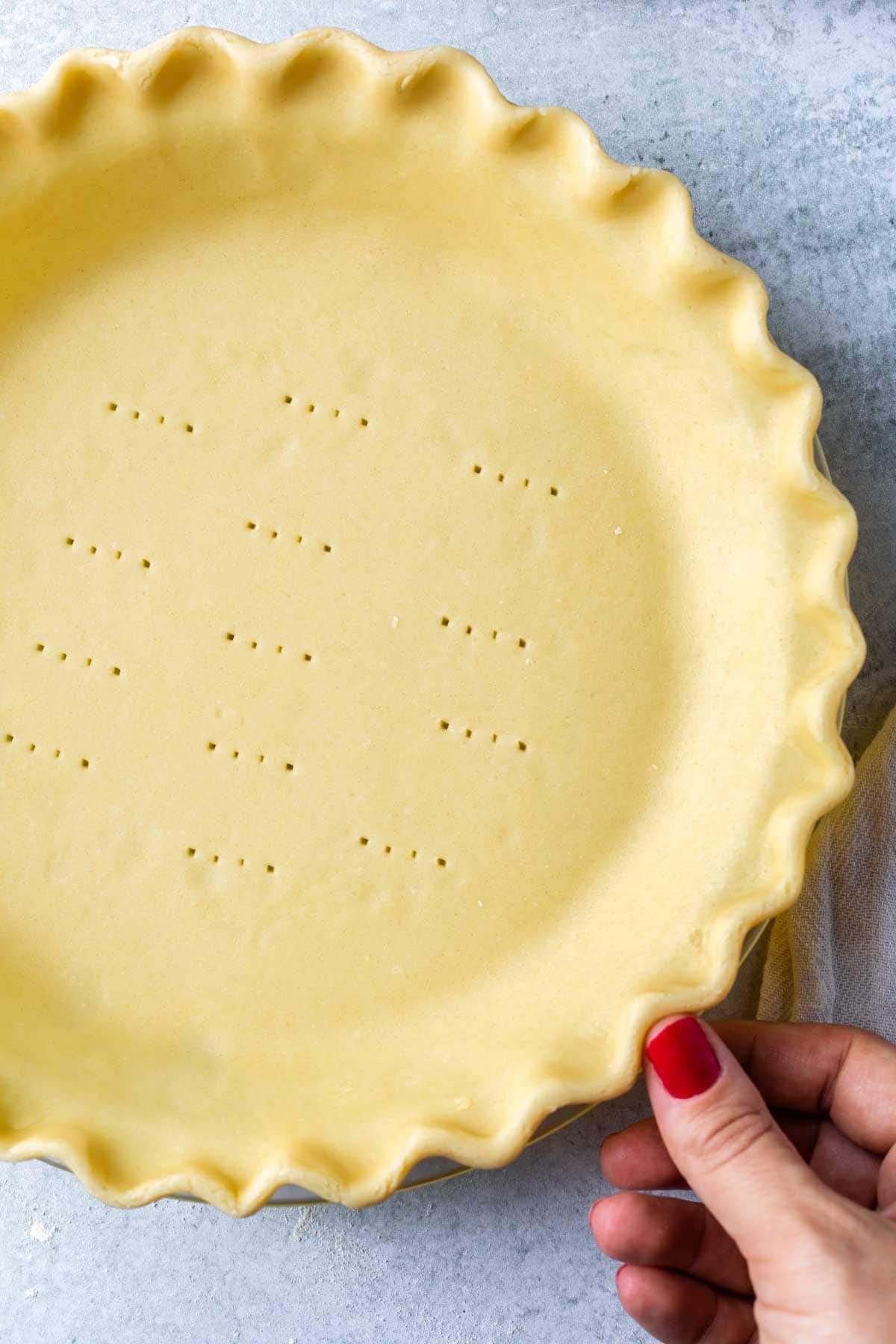
Place your bottom pie crust in your pie plate. You’ll need about 1/2-inch of extra crust around the edges, but trim off anything more than that.
Next, roll that extra 1/2-inch of crust under until it meets the edge of the pie pie. Do this all the way around the crust.
Then, use your two fingers from one hand and the thumb of your other to press the rolled edge into scallops.
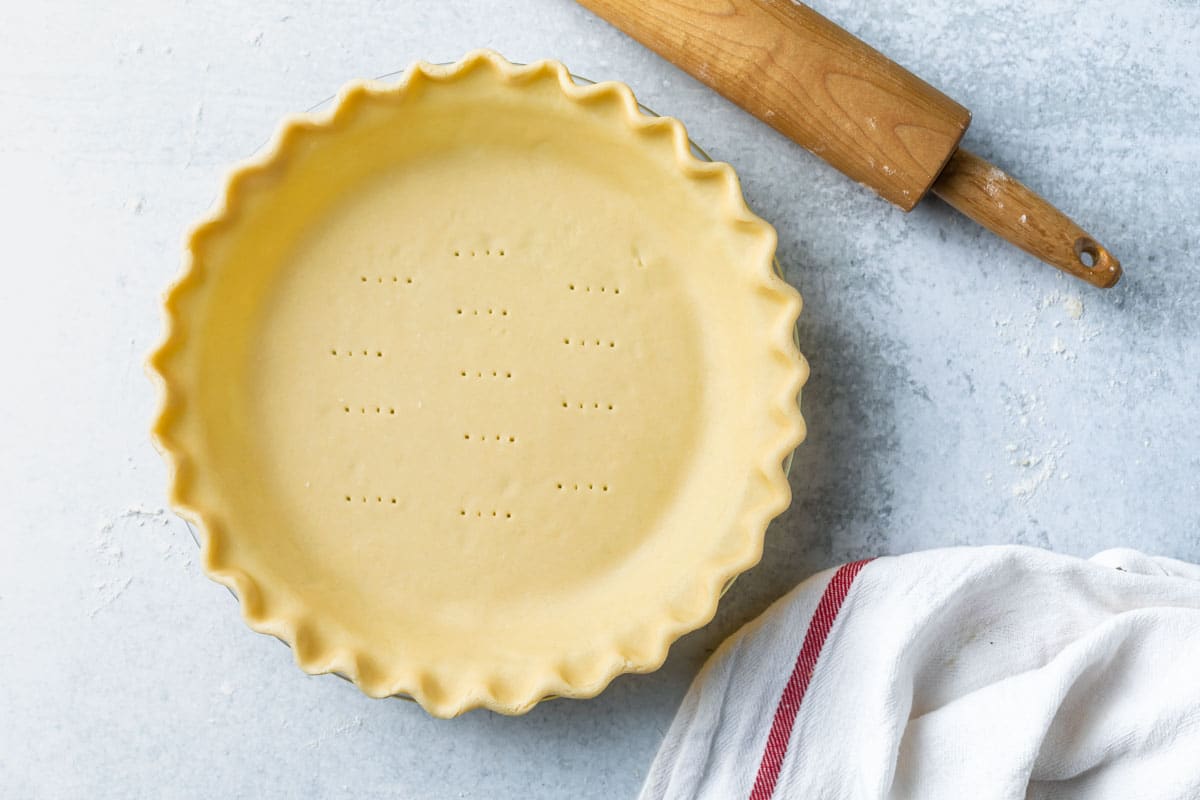
Frequently asked questions
There could be several reasons that your pie crust cracks. It might be too dry (add more water when you’re making the dough). It might be too cold (let it rest for a few minutes before continuing to roll it out). You might be rolling to fast. Take your time and work in a circle pattern rolling in all directions to achieve the best result.
The easiest way to get a crispy bottom crust is to bake your pie on the lowest rack of your oven, closer to the heat. I also recommend using a metal pie plate (or one with a dull finish), and you should make sure you’re not rolling your crust too thick or too thin.
Yes, generally store bought pie crust is vegan because it’s made with palm oil shortening, but always double check the ingredients list and look for animal-based ingredients before purchasing.

Recipes to make with your pie crust:
- Blueberry crumble pie
- Door County sour cherry pie
- Maple bourbon apple tarts
- Tourtiere: Canadian meat pie recipe
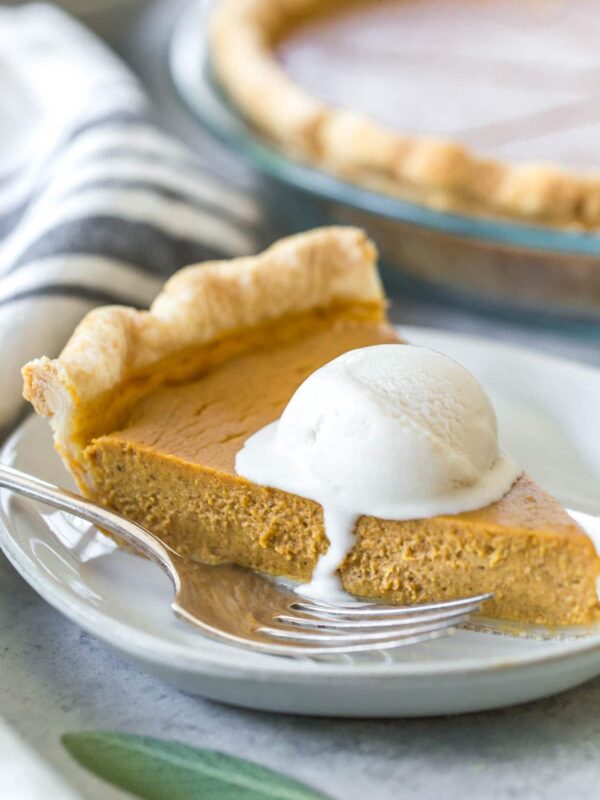
- Dairy free pumpkin pie
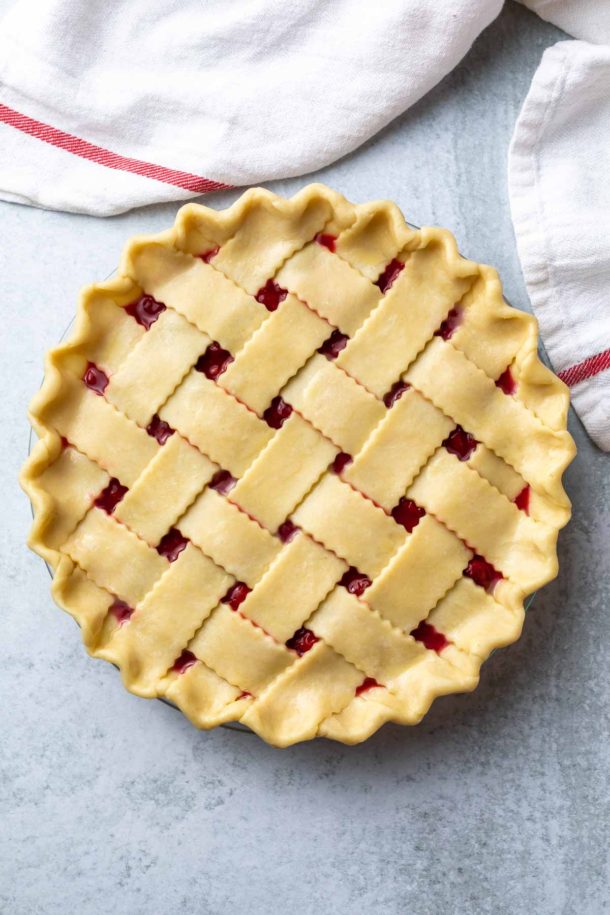
Dairy Free Pie Crust
Ingredients
- 1 cup vegetable shortening, or fat alternative, chilled (190-200g)
- 2 1/2 cups all-purpose flour, 300g
- 1/4 – 1/2 cups ice water
- 1 tablespoon sugar
- 1 teaspoon coarse salt
Instructions
- Mix the dry ingredients. In the bowl of a food processor, combine the flour, sugar and salt, pulsing until well mixed.
- Cut in the fat. Add shortening, or fat of your choosing, and pulse until mixture looks crumbly or slightly mealy.
- Bring it together. While continuing to pulse, slowly drizzle water through the top opening until the mixture forms a dough. Be careful not to overwork the dough.
- Portion and chill. Divide mixture in half and roll each half into a ball. Flatten into a round disc and cover with plastic wrap.
- Roll and bake. Refrigerate for at least 30 minutes or until ready to use. Remove from fridge and roll to desired thickness and size.
Notes
- 1 cup lard (208g)
- 1 cup dairy free butter (223g)
Nutrition
Nutrition information is automatically calculated, so should only be used as an approximation.
Like this? Leave a comment below!






What is the flour measurement by weight?
I found it to be tasteless.
I’m sorry you didn’t care for it. Did you see the correct amount of salt and sugar? That can make a huge difference in flavor.
What temp do you cook it at? Do you recommend pre-baking it with pie weights before adding g a fruit filling?
I think it honestly depends on what kind of pie you’re making! I don’t normally pre-bake my crust for fruit pies, but when I do blind bake them, it’s at 375˚F for about 10 minutes with pie weights. I do this for my pumpkin pie and my dairy free quiche.
Turned out great. This was the first pie crust I’ve been able to have since I had to go dairy free for medical reasons. Made me super happy, thank you! I will definitely need to practice my technique but for the first try, it went pretty well. Instructions were clear and helpful.