
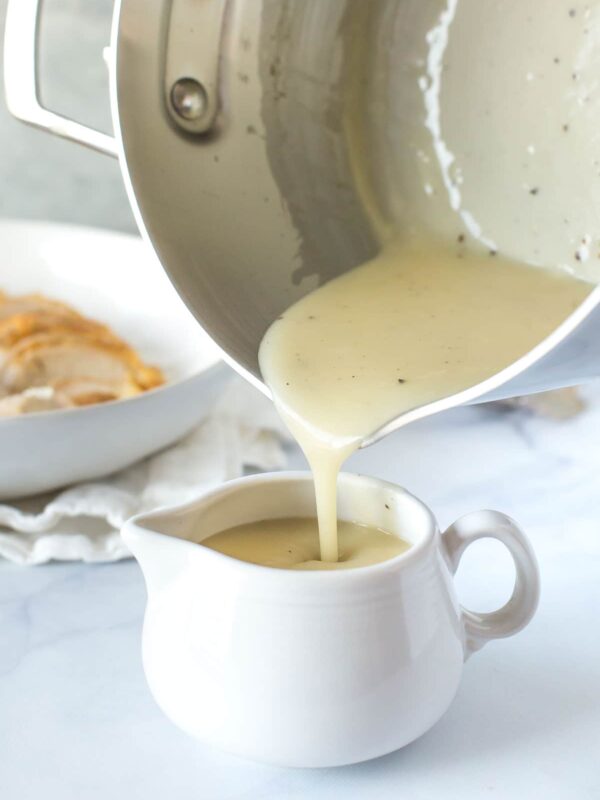
What is veloute sauce used for?
When we first moved to France, I told my mom that I wanted Julia Child’s famous cookbooks for Christmas because I was in a particularly adventurous phase, and Julie and Julia had just come out on DVD, so naturally, I had to have them. Of course, I had no idea how difficult some of the recipes were. I remember two major fails – chicken bouillabaisse and sautéed veal with brown tarragon sauce, but this simple chicken veloute sauce is quite a gem.
Veloute sauce is one of the 5 basic mother sauces, and the only one I’ve learned to make so far. You can make it with any type of stock you have, but you’ll want to use the right stock for your dish.
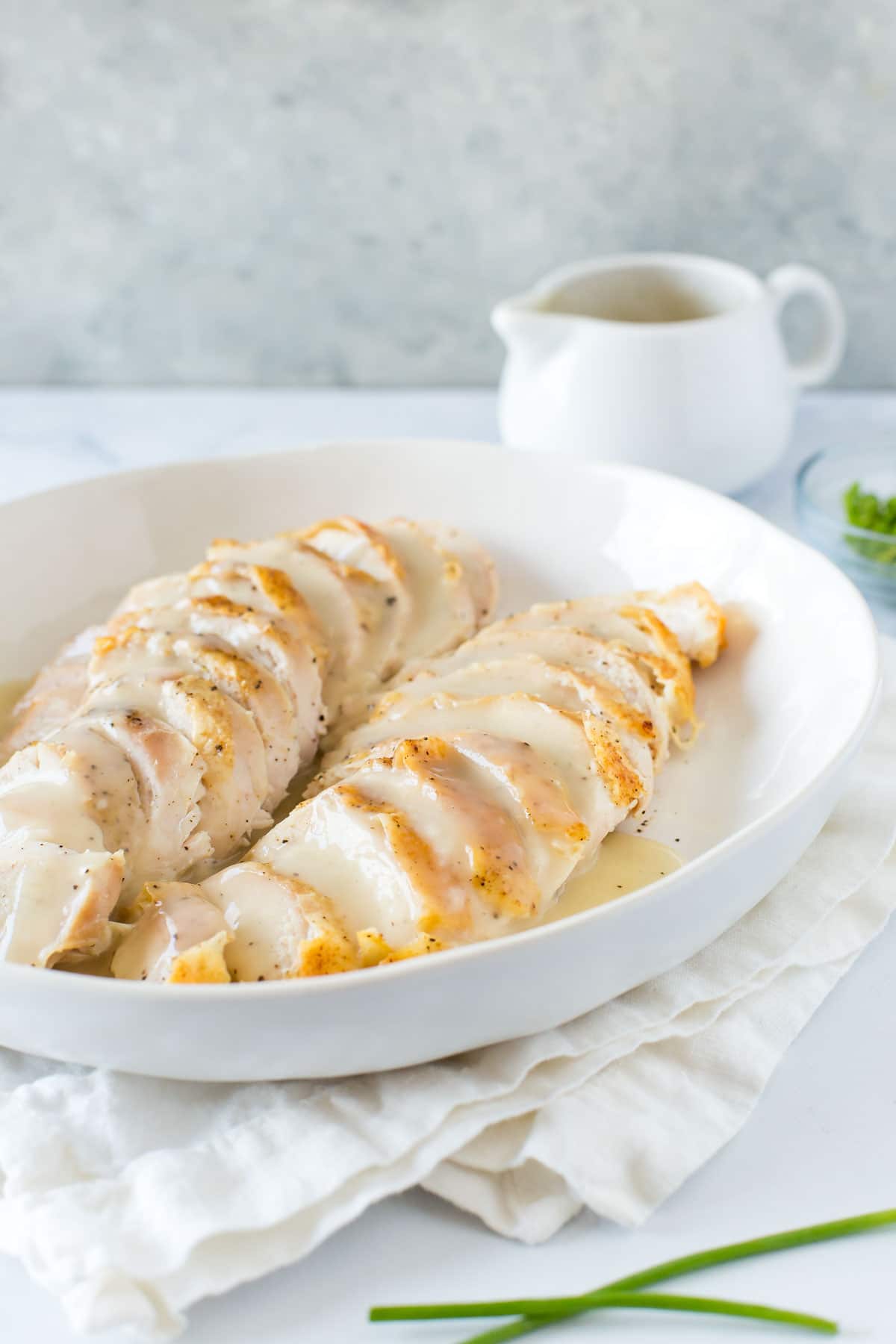
It’s such an easy way to dress up boring chicken, and it can definitely help save your meal if you over cook your chicken. The sauce makes quite a bit, and I can usually stretch it between two meals if it’s just our family. This sauce can be reheated easily if you have leftovers, just add a little more chicken broth or some white wine to thin it out if necessary.
If you like this recipe, you have to try this honey teriyaki sauce, and this romesco sauce and this easy chimichurri sauce.
Searching for more basic chicken recipes? grilled chicken tenders / panko crusted chicken / coconut chicken tenders / smoked chicken breast


Ingredients & substitutions
- Butter (or in our case, butter substitute) – You can use your favorite dairy free butter alternative. It takes the place of traditional butter in the roux, adding a rich, buttery flavor without dairy.
- All-purpose flour – Flour is needed for thickening the velouté sauce. This is another main component of a roux and necessary achieve the silky, creamy texture typical of a good velouté.
- Chicken stock – This infuses the sauce with a deep, savory flavor. It’s what gives the velouté its distinctive chicken essence, making it a perfect match for poultry dishes.
Making changes to a recipe can result in recipe failure. Any substitutions listed below are simple changes that I believe will work in this recipe, but results are not guaranteed.

The following is a detailed overview of the recipe steps with added tips and tricks for recipe success. For a simplified and printable version, including ingredient amounts and more formal instructions, see the recipe card below.
How do you make chicken veloute sauce?
Make a roux. Start by making a roux. I use equal parts butter substitute (or butter, if you can have dairy) and all-purpose flour. Use your biggest saucepan, and melt the butter substitute and whisk in the flour. Allow it to cook for about a minute or so, but keep whisking it around so it doesn’t burn.
Thicken the sauce. Then slowly whisk in the chicken broth. I try to add about 1/2 cup at a time so that I don’t get an big lumps, and it allows the sauce to thicken as it cooks.
Season the sauce. If I have it, I also add a splash of dry white wine with the broth. It’s not necessary, but I think it adds a little bit of extra flavor. Salt and pepper are absolutely necessary, too. I usually start with 1/2 teaspoon of coarse salt and add more to taste. It really depends on the amount of salt in your broth. If I’m using reduced-sodium, I usually lean more towards a full teaspoon. Definitely taste as you go.
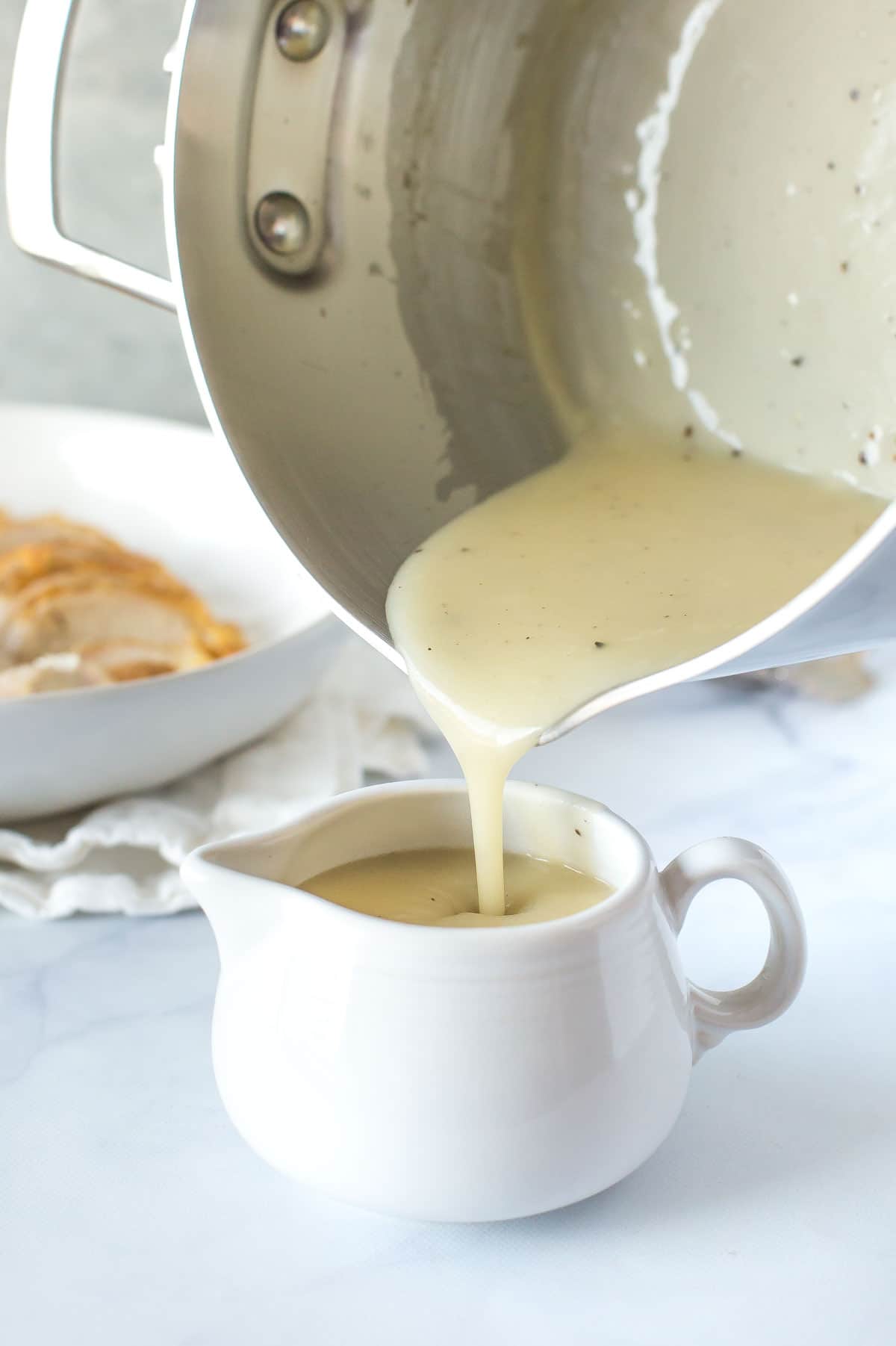
Simmer the sauce. Let the sauce simmer until it’s the consistency you want. It should at least coat the back of a spoon, but I tend to make my chicken veloute sauce a bit thicker than that. It all depends on how thick you want it and how long you cook it.

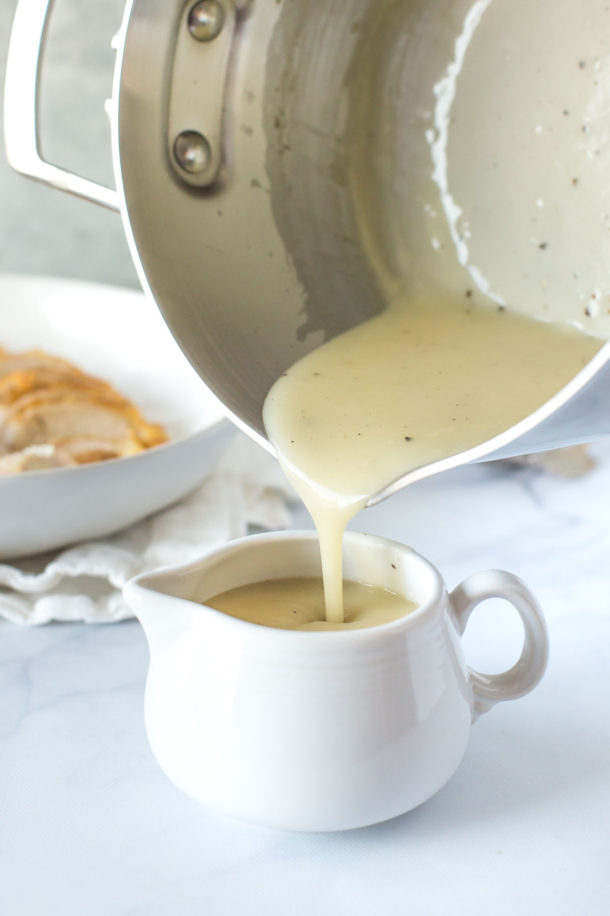
Simple Chicken Veloute Sauce (Dairy Free)
Ingredients
- 2 tablespoons dairy free buttery spread, such as Earth Balance
- 2 tablespoons all-purpose flour
- 2 cups chicken broth, room temperature or warmed
- Splash dry white wine
- 1/2 – 1 teaspoon coarse salt
- Black pepper, to taste
Instructions
- Melt the buttery spread in a small saucepan over medium-low heat.
- Add the flour to the melted buttery spread, whisking to combine.
- Let the roux cook for about 30 seconds to a minute.
- Pour chicken broth into the sauce pan, whisk until smooth.
- Simmer on low heat – stirring occasionally – for 5 minutes or until ready to serve.
Nutrition
Nutrition information is automatically calculated, so should only be used as an approximation.
Like this? Leave a comment below!







This was AMAZING alongside our chicken cordon bleu! Thank you! Bookmarking this for next time.